
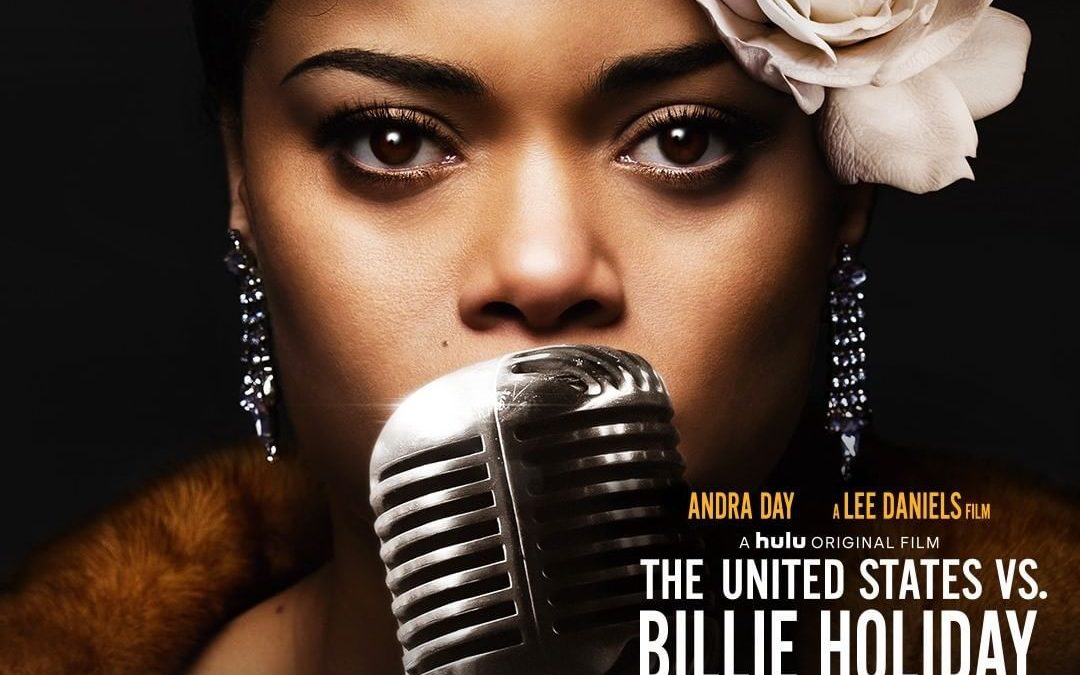
“Jazz music is the devil’s work.” I can’t help but wonder how many people actually could keep a straight face when that line was uttered in The United States vs. Billie Holiday (2021). I doubt anyone was surprised to learn it was Harry J. Anslinger—the 1st Commissioner of the Federal Bureau of Narcotics—who said the line, and I’m sure we can all guess what he looked like. I’m not old enough to remember when rock music was considered the “devil’s music,” but I’ve experienced something similar seeing people condemn violent video games as causing aggression in young minds. The truth of the matter is that censorship has many faces.
That being said, April is Jazz Appreciation Month, so I took it upon myself to watch the biopic The United States vs. Billie Holiday (2021) for the first time. The movie was far from flawless, though I would certainly argue that Andra Day’s performance as the titular character absolutely made it worthwhile. Anyone can see why she claimed the Golden Globe Award for Best Actress in a Motion Picture – Drama (and became only the second Black woman in history to earn it since Whoopi Goldberg in 1985 for The Color Purple). She stole the show every time she was on screen and was so mesmerizing on stage that I could never look away. I didn’t know the same woman who had me listening to her R&B single “Rise Up” on repeat for days after just one listen, would later school me on classic jazz songs that I probably should have heard by now. I suppose it’s only fitting that she would nail the role, considering her stage name is inspired by Holiday’s nickname “Lady Day.”
Knowing very little about Billie Holiday, even with her status as a legend in the world of jazz music, I didn’t quite know what I was in for with the movie. Then again, I doubt anything could’ve prepared me for such a raw, vulnerable portrayal of the singer, or the powerful messages that still hold true today, including commentary on abuse, addiction, the thin line between and the war on drugs and Black people, and the lengths that those in power will go to silence minorities. I could go on and on about any of these topics if given the chance, but alas, I’ll focus on the jazz history featured and how it went hand in hand with giving a voice to the people.
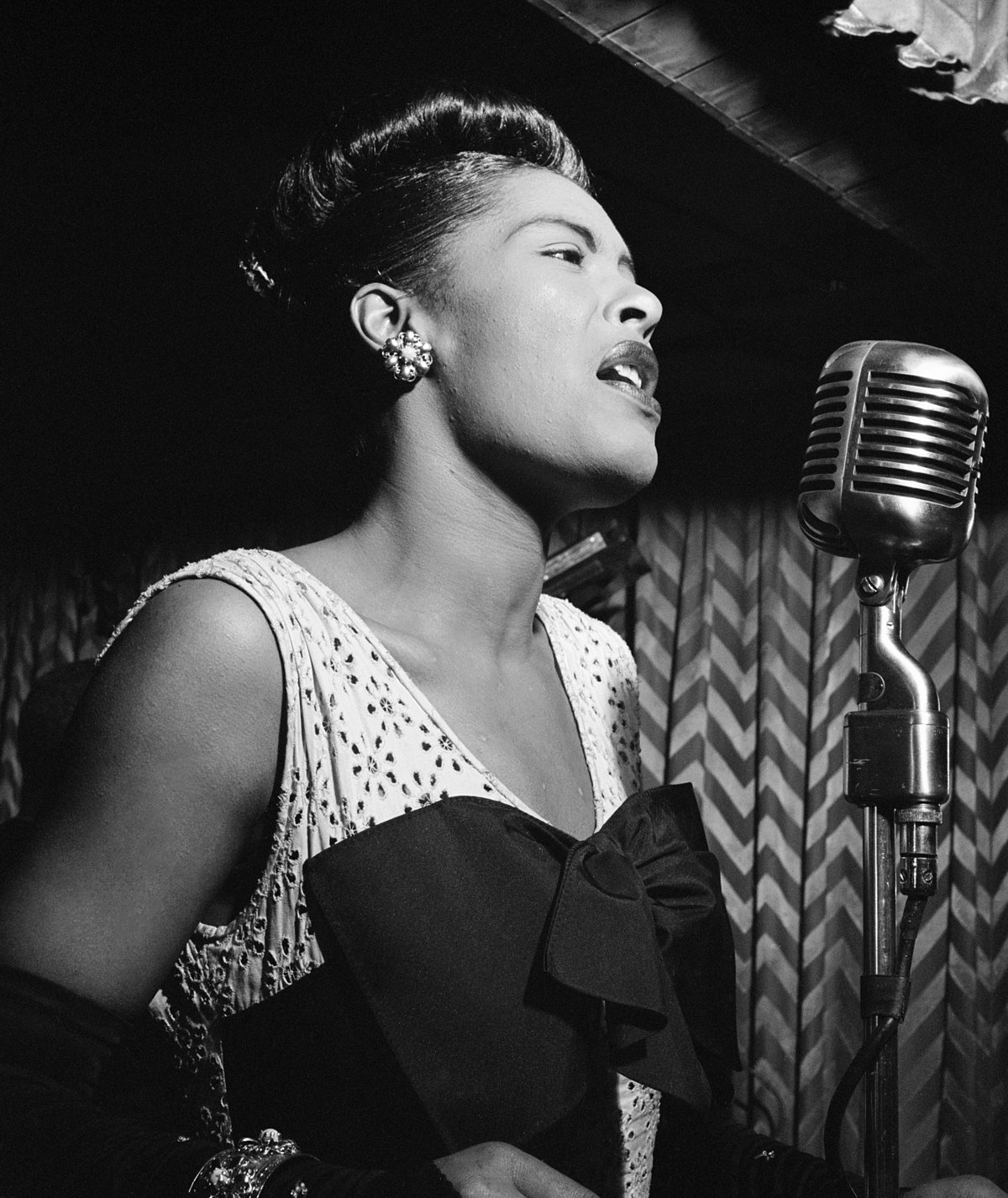
As racial tension peaked and lynches were a prevalent, cold reality to the Black community, Billie Holiday’s voice was her only weapon while dealing with her internal and external demons. Her song “Strange Fruit” took the world by storm with its haunting imagery of what a lynch looks (and even smells) like, and made enemies in high places, a.k.a. the government. Hoover called it “un-American,” and our ol’ pal Anslinger in the film said it was “causing a lot of people to think the wrong things.” Holiday knew the real reason the FBI continuously hounded her about the song and said as much in the film: “It reminds them that they’re killing us.” Her lover in the film, a Black FBI agent, stated the truth to Anslinger’s face, as well: “You hate her. Despite all the shit in her life, she’s made something of herself, and you can’t take it, because she’s strong, beautiful, and Black.”
When Anslinger came into her hospital room claiming he just wanted to know the names of her suppliers for the last time, I couldn’t help the smirk that appeared on my face because I knew what was coming. Sure enough, Day delivered Billie Holiday’s final lines like a queen, even as she succumbed to the liver and heart failure eating away at her: “You think I’m gonna stop singing that song? Your grandkids are gonna be singing ‘Strange Fruit.’” She then cackled as he and his goon left the room, and has the last laugh even now—the single was named “Song of the Century” by TIME Magazine, and if Anslinger had lived just three more years, he would’ve been able to see “Strange Fruit” be inducted into the Grammy Hall of Fame.
However, it’s not like we’re doing especially great as a society even now; race wars are still common, if the #StopAsianHate and #BLM movements are any indications. Having the biopic state at the end of the movie that the Emmett Till Anti-Lynching Act was considered in February 2020 and has yet to pass was like adding salt on fresh wounds; Holiday died at age 44, handcuffed on her deathbed, while Anslinger was commended for his efforts and rose above his station until he retired a successful man. I suppose the key difference between then and now is the medium with which we can talk about racism, thanks to social media.
Jazz music started with us. Billie Holiday was a flawed human being, but the biopic made it plain how she was hurt by the world, first. Miss Freddy (played by Miss Lawrence) put it rather well in the film: “Singing is her life and she gives that away to the world. So, at the end of the day, she don’t hurt nobody but herself.”
Theoretically, it would’ve been easy to stop singing “Strange Fruit” to get the federal government out of her beautiful hair. But she, just like the people of today, wasn’t going to let her voice go unheard. And she knew that as much as music can calm the mind, it can move the heart and get entire countries talking.
penned by Diva Ferrell